The Summation of All My Wildest Dreams

Good morning, good morning!  What a wonderful Monday it is thanks to Raina who sent me this insane article from W magazine.  After months of loyal readership she has managed to pinpoint, with laser-like accuracy, exactly what mama likes:  obscene use of color?  Check. Artwork run wild?  Check.  Garish accessories, interesting use of materials and a view to boot? Check, check, and check.  Behold:
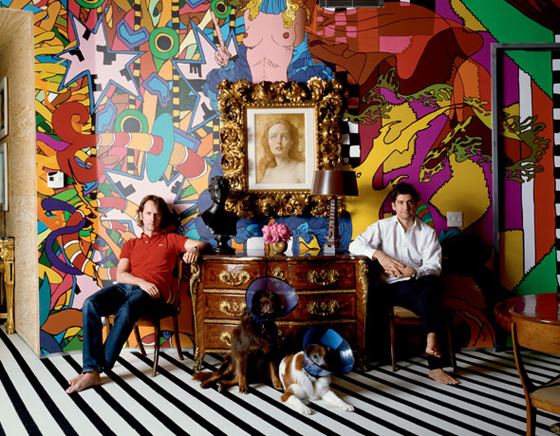
You may be wondering if I could actually wake up every morning to such a full-blown-hyper-color attack on my retinas.  The answer is: yep, you bet your sweet ass I can.  Did you get a load of those dogs?  If I thought my pets would still come snuggle up to me at night, Laser and Magnus would be in neon lampshades faster than you could say holy good lord that's hot.

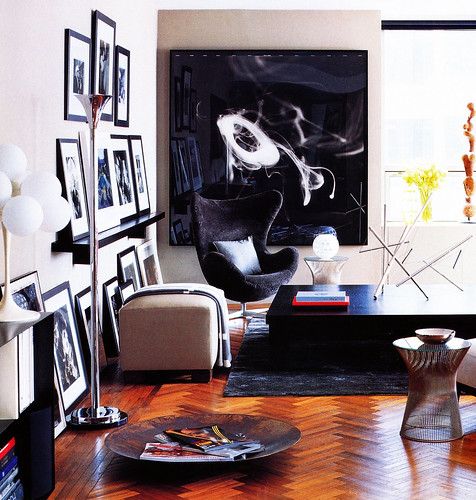
Let's talk about what's going on here: Blessed owners Tobias Meyer (ahem, head of Sotheby's worldwide contemporary art) and Mark Fletcher pose in front of mural by Brazilian artist Assume Vivid Astro Focus. A John Currin oil is perched above a French 1740s kingwood commode.  Commode!  Who owns one of those?  Jeeze.

These dudes had me at hello, but I'm sure, like me, you're dying (dying!) for more:
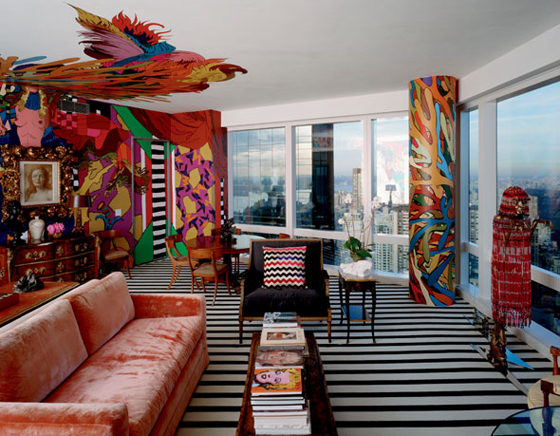
The only dream-shatterer here is the mural on the ceiling, I'm not 100% on that.  But really, don't you all just want to curl up in a little ball next to that pillar while hugging the Missoni pillow, thanking whatever god you believe in that you're alive?  Holy Crap my mind is going to explode!

Time for us all to hyperventilate in tandem:
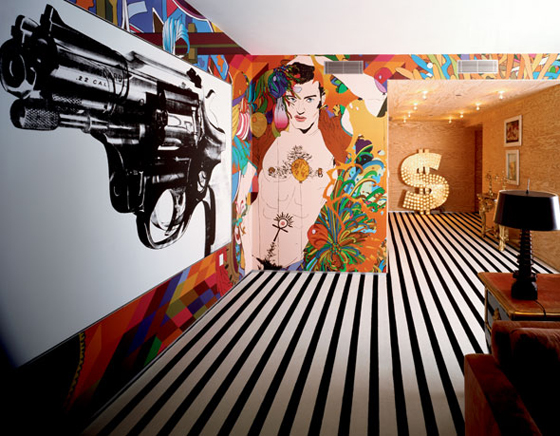
Andy Warhol gun + LIGHT UP DOLLAR SIGN + a naked man that Nagal would have painted if he'd painted men?  It's just TOO GOOD!  Here's what the owner's had to say:

Everything is about the reality of it all, about the human condition and facing death. Art right now is about desire, human nature, sexuality, power and violence.

These men are spending life inside a living, breathing piece of art.  And I want to strangle them for it.

Kleenex time!
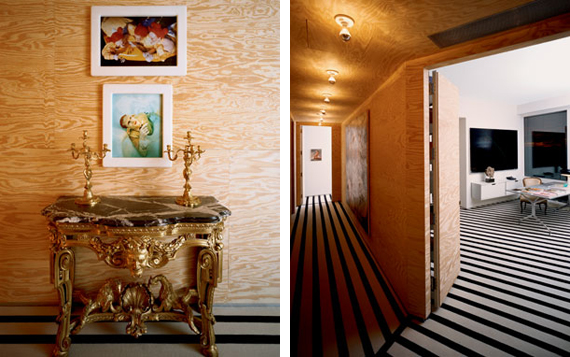
Plywood befriends the trippy Stark carpet while a diptych from Matthew Barney's Cremaster series hangs above a German 1760 gilt-wood console.  The whole kitten-kaboodle is topped by German rococo ormolu candelabra  (MATTHEW BARNEY!!! what is this?  The freakin Guggenheim?)

The owner's note that they enjoy using low-grade materials in the design as there is "a hopefullness to it's unfinished quality."  Um, right.  Keep talkin, buddy.  Now, don't get me wrong, j'adore la plywood, but if I even consider putting that moldy old board next to my plethora of craigslist finds, it will be all over.  I think it's important to note the power of context here, with a side note that I, despite my delusions of grandure, am not the head of the world's premier art auction house.

To wrap it all up, let's take a look at the window I may or may not have to jump out of:
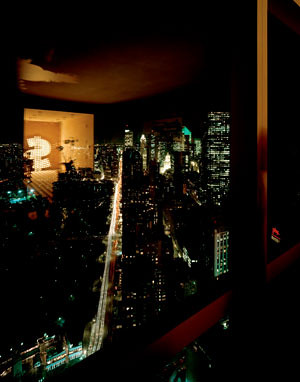
Do you see the dollar sign reflection?  Doesn't it just make your heart sing?  You can all send your thank you notes for providing such a majestic kick off to your week to me at godsend@design-crisis.com*.

*not a real email address, but it should be, huh? 
Feelin' Fussy

I'm on pins and needles, people. Have bitten my nails into the quick. Stomach in knots big enough to anchor a billionaire's yacht. Election Day is almost here, but instead of pumping up the volume on CNN and turning my living room into campaign headquarters, I think it may be best for me to focus on something else right now, to go to my happy place. Yes, it's I Spy Art Day here at Design Crisis, where I bring you a roundup of interior design's latest muse. Today's special is the always interesting photographer, Adam Fuss.

adam fuss

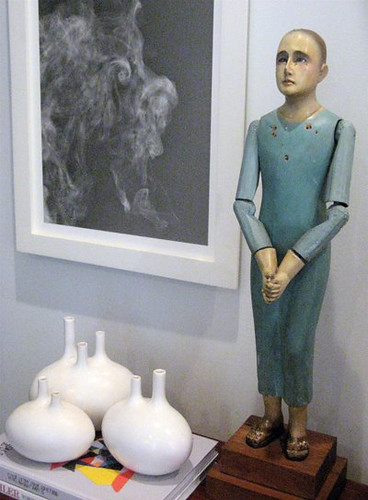
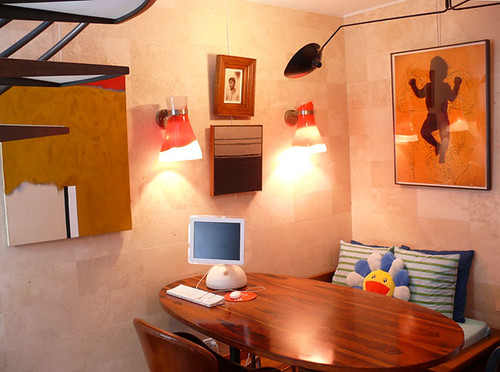
Adam Fuss is one of those old school dudes that I can identify with. Instead of embracing the novelty of digital wizardry, Fuss goes back to basics by frequently ditching the camera altogether and dealing with the light sensitive properties of photographic paper itself. In the home of Pieter Estersohn, seen in New York Social Diary, this photogram of Estersohn's son Elio hangs as a super realistic, one of a kind baby portrait. Instead of capturing a representation of the baby, Adam Fuss captures the shadow of the baby crawling over the paper, and in a sense, he captures the baby itself (but not literally, because that would be illegal).

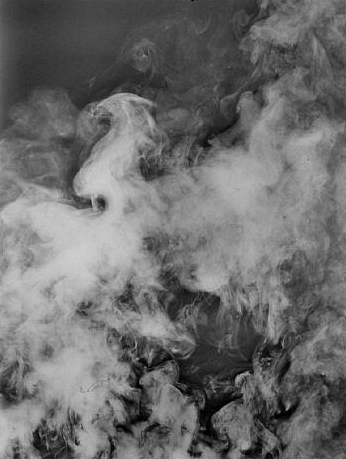
While Estersohn was lucky enough to have a portrait made for him, most of the pictures floating around the designosphere are of Fuss' black and white photograms of smoke.

fuss smoke

Donald and Phillip's amazing art filled home in San Francisco features this small Fuss photogram (courtesy of More Ways to Waste Time).

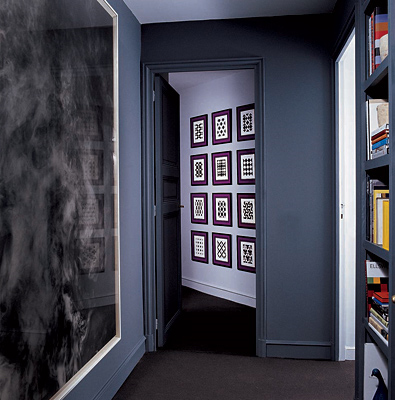
Generally, Fuss' pieces tend to be large in scale, so that they become a viewing experience where one is enveloped in the image, as seen in this gorgeous Paris apartment.

two for the road

To stand in front of one of Fuss' photograms of smoke is to stand in a whirling maelstrom of eddies and currents. Sounds like my stomach. So much for happy distractions!

smoke and mirrors

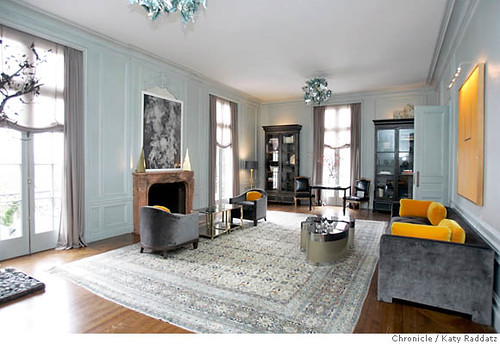
All of Fuss' work is intensely aesthetic, seductive in both its delicacy and first generation sharpness. The print over the fireplace makes a lovely addition to this Smoke and Mirrors themed room designed by Steven Volpe featured in the San Francisco Chronicle.

Earlier works involved hanging bare bulbs on a string and allowing them to move, exposing the paper in a pattern of spirals, as seen in this home of Charles Allen, featured in Architectural Digest.

adam fuss

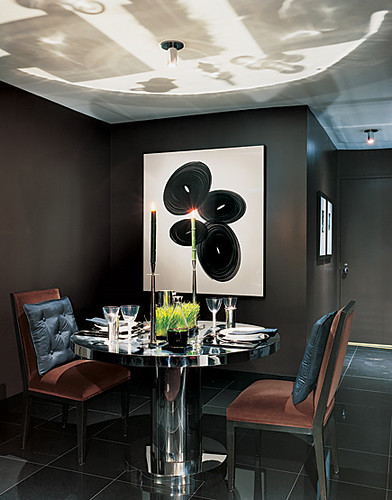
Fuss' black and white works may be particularly popular in the design world because they behave so minimally on the wall, as seen in this apartment featured on Habitually Chic.

adam fuss

It's like very elegant (and expensive) white noise. But I have followed Fuss' work for years, and he certainly didn't start out as a decorator's favorite. Many of his earlier works recalled death and decay, and a very studied interest in photography's unique ability to capture the "what has been," as philosopher Roland Barthes said.

adam fuss

These beautiful plants were pressed onto paper, exposed with light, and captured with a permanence that a real pressed flower can never emulate. It's the intersection of mortality and immortality, and it gets back to the basics of what photography initially set out to do: to preserve a slice of time.

adam fuss

This exact configuration of smoke only existed for the split second that it was illuminated by light. And then it was gone.

adam fuss

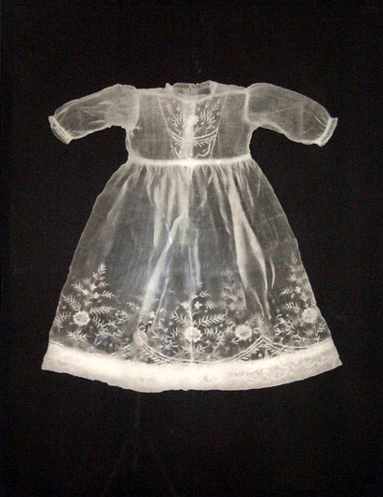
The images in his My Ghost series reference the impermanence of time and, consequentially, of life. A child could fit into this christening dress for a matter of weeks, perhaps, before she/he outgrew it. As the Greek philiosopher Heraclitus said, "Panta Rhei." Everything changes. You cannot step into the same river twice.

adam fuss

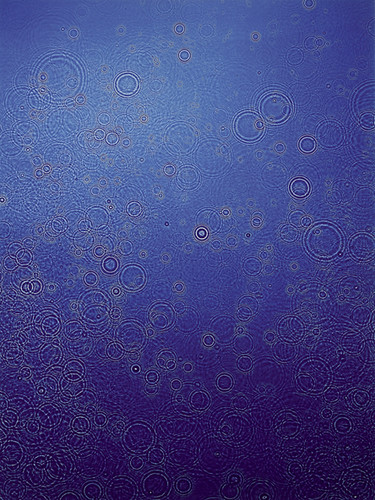
And raindrops will never fall in this same pattern again.

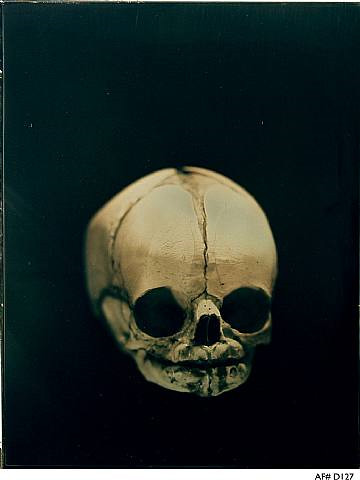
Recently, Fuss has begun experimenting with other forms of image making, taking up the Daguerreotype (at which time he became my hero, since I used to make them, too) as another way to create one of a kind images. The Daguerreotype was the Victorian's medium of choice, and its clarity was shocking to them (and still is - the sharpness of digital isn't even close).

skull

The Victorians famously used Daguerreotypes to record (in addition to more conventional portraits) images of their deceased children, posed as if sleeping. Perhaps they were creating an alternate universe where the child might have lived. Or perhaps the images acted as reminders that nothing lasts forever. Fuss has a similar predilection for Memento Mori and its imperative to seize the day.

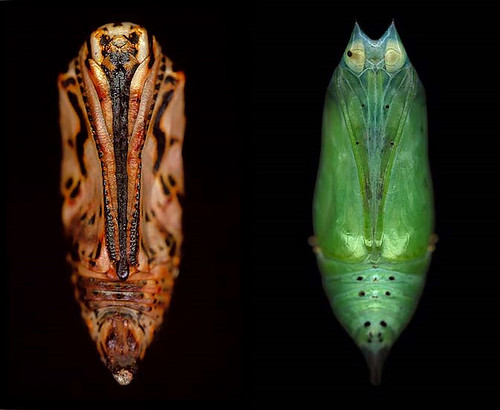
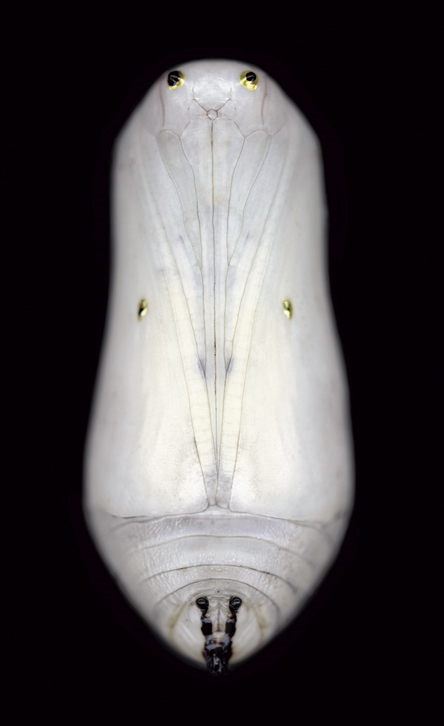
Once again changing his method of production, Fuss photographed butterfly chrysalis and enlarged them to six feet tall for his latest series.

chrysalis

As iconic symbols of transformation and metamorphosis, they are compelling both in their stasis and potential energy.

adam fuss

Fuss' photographs act as talismans, reminders of the past and its contrast to the present. And so they are also avatars of change. Nothing can stay the same.

Nor should it.

vote

(Art images courtesy of the artist and Fraenkel Gallery, Art Lies, Artnet, and Photography Now.)

Derelicte

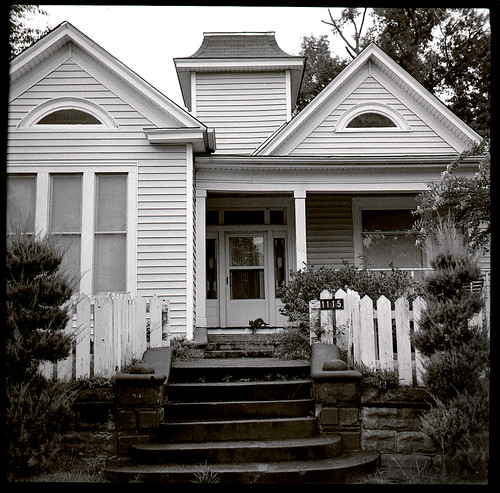
I know I shouldn't keep shoving the old buildings down your collective throat, but Karly's out of town and I'm in charge (insert maniacal laugh here), so I shall therefore continue to post unabated on my unabashed love affair with history (but I promise to do something different for tomorrow, ok?). It probably all started with my childhood home, built in the early 1900s, which was undoubtedly uninhabitable when we moved in. I mean, peeling walls, wood burning stove, no a/c (IN TEXAS) -- the craptacular works. My mom spent most of my tender years with me on one hip and a bucket of wallpaper paint on the other. I learned to climb a 14 foot ladder at 5. It was freaking awesome. Except that we lived across from the welfare clinic, because all the old houses in Texarkana are in the worst parts of town. Anyway, the only picture I have isn't the greatest, but at least you'll have an image to fix on:

1115 main

1115 Main Street: where nothing is square and wild cats eat bologna out of your hands. The outside almost always existed in this ramshackle state, as if at any minute the entire house could revert to a heap of sticks and concrete, but the inside was like a passport to crazytown. My Mom covered EVERYTHING (even the entryway tiles) in florals and damasks. Although not my taste, it was pretty freaking genius.

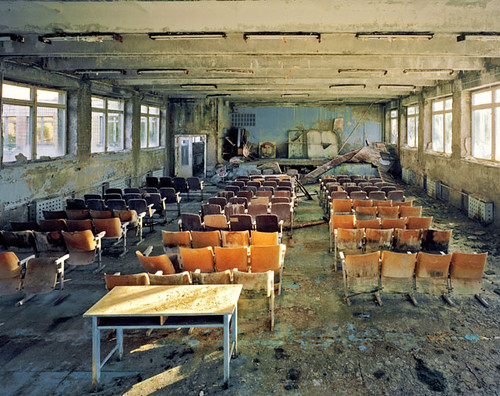
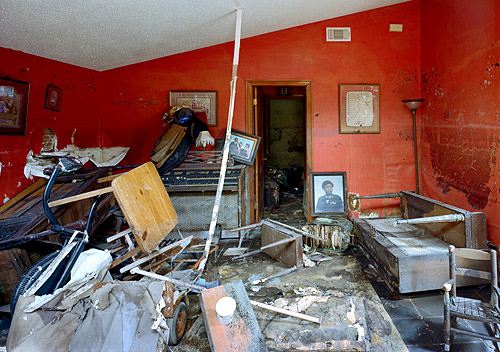
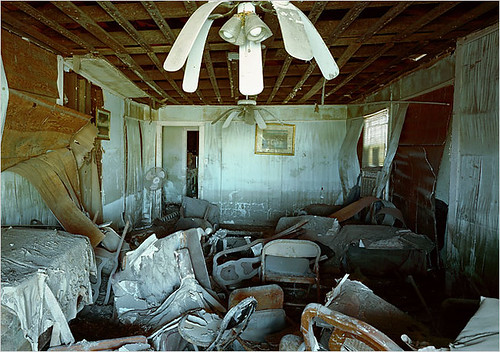
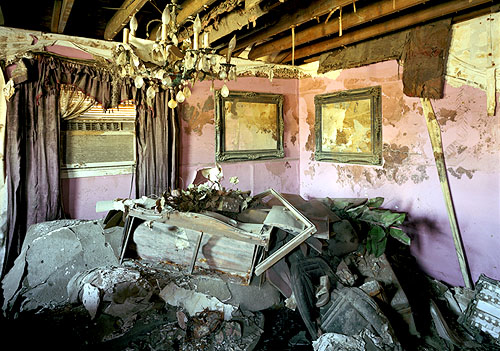
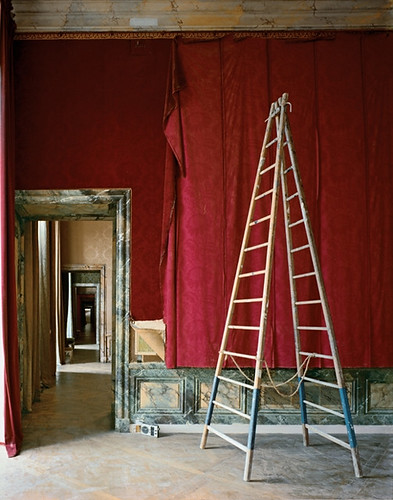
So when I became interested in photography, I was probably predetermined to gravitate towards pictures of dilapidated interiors. Robert Polidori, photographer of the aftermath of Katrina and Chernobyl, as well as documenter of the restoration of Versailles, in glorious, large format film, is a particular hero:

robert polidori

robert polidori

robert polidori

robert polidori

robert polidori

(Photos courtesy of the artist and found at Bomb Magazine, Art Info, Polis, and Metvier Gallery)

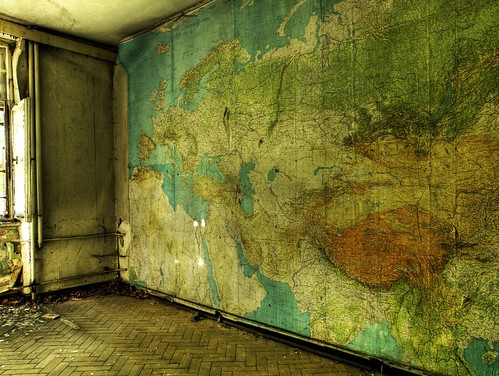
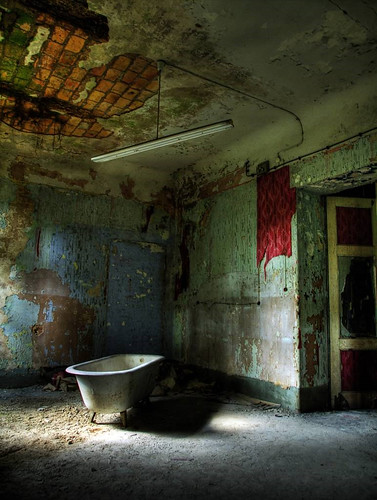
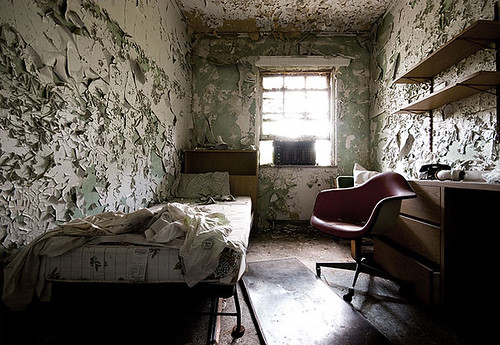
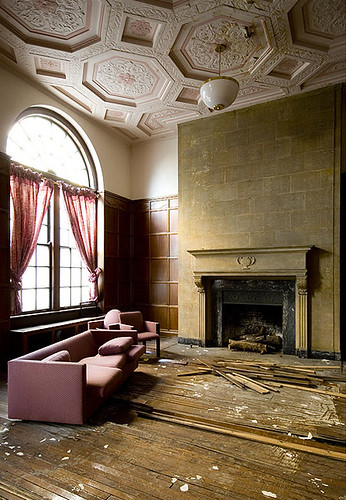
The camera loves texture. It loves the peeling bits of old paper, the elegant curve of a water stain, the shadows cast by a million pebbles, and so it loves age and ruin and decay. And I love these pictures I recently found by a photographer in Spain on a blog called Abandonalia:

abandonalia

abandonalia

As well as these lovely images from a photographer who runs The Kohrman Report:

kohrman report

kohrman report

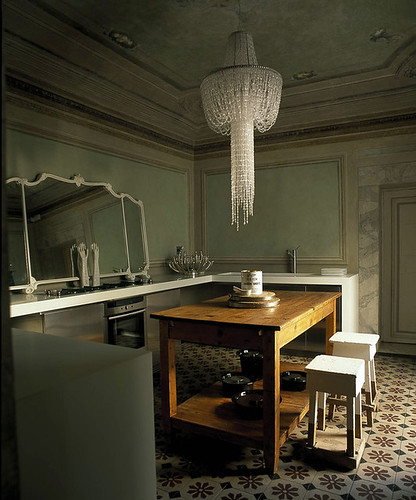
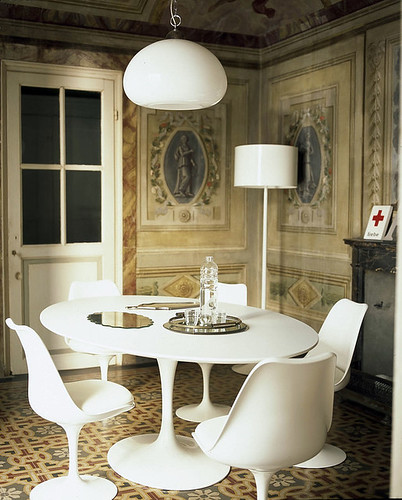
What I am getting at here, in a very roundabout kind of way, is that I have a fantasy about living in a place like this. A place where I would just sweep the dust off the rickety floors and put a coat of varnish over the peeling walls (and the map is staying, fo shizz). It is a ridiculously romantic notion to think you can preserve layers of history like a fly in amber, and I know that the rats and water leaks and hobos squatting in the hallway are all scary, dirty things (not to mention whatever is hiding out in that dank fireplace), but I really can't help myself. I shall call my new style Derelicte, but I'll be needing some new furniture. And I bet you've already seen these pictures because they're everywhere, but this is what it's all about in crazy Erin's wildest dreams:

sabrina bignami

sabrina bignami

sabrina bignami

sabrina bignami

sabrina bignami

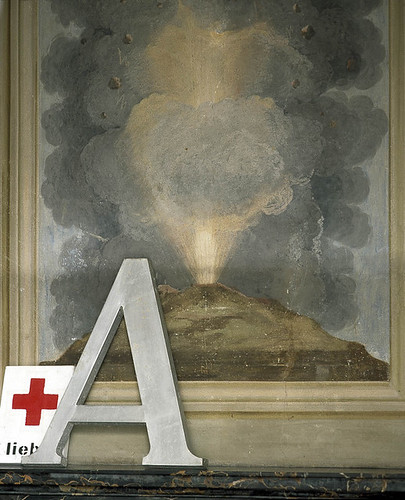
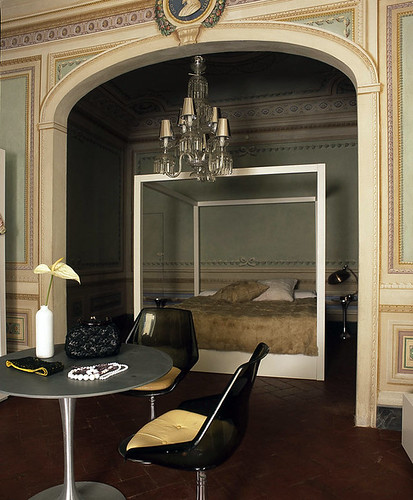
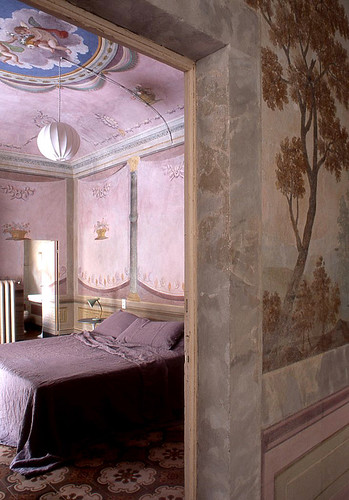
I love everything about it: the patina of age and dinginess, yes -- the shocking contrast of the furniture, the lack of fuss in accessorizing, even the purple bedroom, although purple is my least favorite color. Sabrina Bignami, architect and owner of Casa Orlandi, you are today's recipient of my super stalker girl crush, so don't be surprised if I show up at your door (as soon as I can figure out where it is). I promise to do my own laundry and sweep the crumbs off the table.